

The Jeffrey Epstein Case and Its Impact on Digital and Corporate Ethics Today
In the ever-evolving business and digital landscape, integrity and ethics are fundamental pillars. However, recent history reveals disturbing cases that challenge these principles, exposing the vulnerabilities and complexities of the corporate and technological world. One such case, which continues to reverberate globally, is that of Jeffrey Epstein, a figure whose network of influence extended across spheres of power, finance, and, surprisingly, technology.
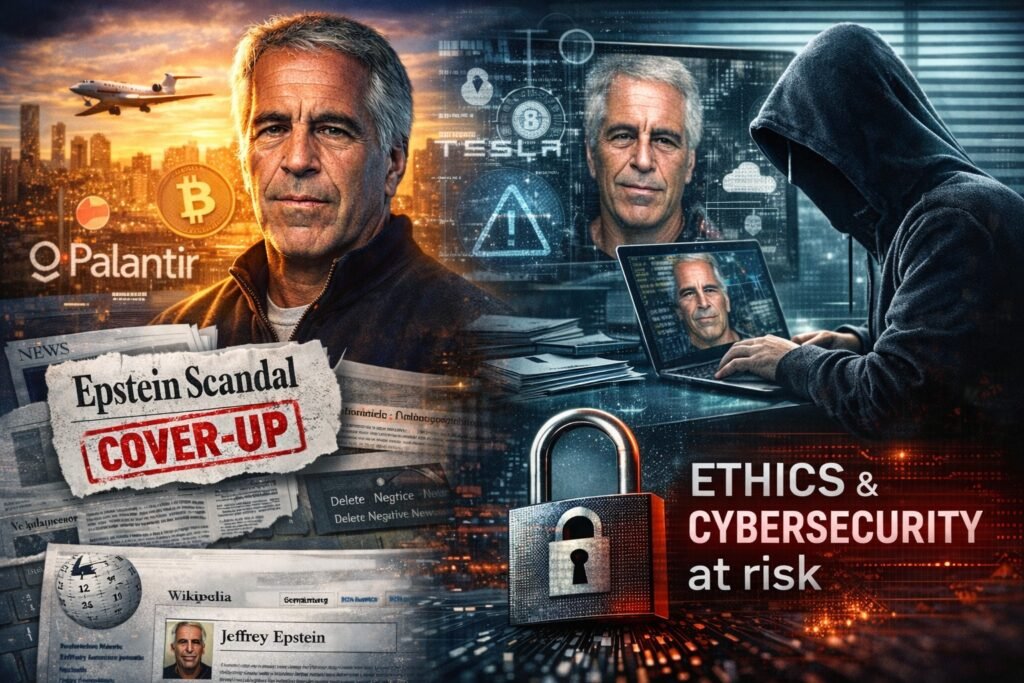
The Jeffrey Epstein case raises crucial questions about digital ethics and corporate responsibility, making it a milestone in the discussion of digital ethics and the Epstein case.
This article dives deep into the Jeffrey Epstein case, exploring its complex and disturbing connections to the business and digital world. We will analyze in detail how his actions, his network of influence, and the subsequent attempt to manipulate his digital footprint reveal crucial and often painful lessons for companies, leaders, and technology professionals.
Prepare for an in-depth analysis of ethical challenges, corporate responsibility in the face of high-profile scandals, and the undeniable importance of transparency and cybersecurity in the digital age, where reputations can be built or destroyed in seconds, and digital ethics is put to the test. The relevance of the Jeffrey Epstein case to digital ethics is undeniable.
Jeffrey Epstein’s Connections to the Business and Technology World
Jeffrey Epstein, despite his infamous reputation, managed to infiltrate and establish significant ties with some of the brightest minds and most influential companies in Silicon Valley and the financial sector. His ability to access elite circles was not limited to politicians and celebrities but extended to technology leaders and venture capitalists, raising serious questions about digital ethics and due diligence, a central aspect of the Jeffrey Epstein case.

First, it is crucial to understand the extent and depth of his network. Recently released documents, resulting from investigations and legal proceedings, revealed that Epstein was not merely a passive observer but an active and shrewd participant in strategic investments. He used his considerable fortune and social influence to associate himself with promising projects, often in early stages of development, which gave him a position of power, privileged access to confidential information, and the ability to shape narratives.
This web of connections spanned various sectors, from traditional finance to the frontiers of technological innovation, and the impact of the Epstein case still resonates, shaping the discussion on digital ethics.
Investments in Technology Companies and Cryptocurrencies
One of the most surprising aspects of his connections was his involvement with emerging technology companies and the cryptocurrency sector. For example, it was revealed that Epstein made early investments in Coinbase, one of the world’s largest cryptocurrency exchange platforms, and in Palantir, a data analytics software company co-founded by Peter Thiel [1] [2].
These investments were not merely financial transactions; they represented a strategic gateway into an ecosystem where innovation, venture capital, and the brightest minds intertwine. His presence in these elite circles raised serious questions about the due diligence that should be applied and the ethical standards that govern investment in startups and technology companies.

His connection to the cryptocurrency world, in particular — a sector that, in its early days, was often associated with a degree of anonymity and less regulation — adds a layer of complexity and opacity to his financial operations and his ability to move large sums of money without scrutiny, challenging digital ethics and the way the Jeffrey Epstein case exposed these vulnerabilities.
The Network of Influence in Silicon Valley
Epstein’s influence in Silicon Valley went far beyond direct investments in companies. He meticulously cultivated relationships with technology billionaires, such as Elon Musk and Peter Thiel, and actively participated in high-level social events and conferences. This proximity to prominent figures in the sector allowed him to maintain a facade of respectability, access privileged information, and, crucially, expand his network of contacts for purposes that are still being fully uncovered [3].
His presence in these circles raised uncomfortable questions about complacency and the lack of questioning in environments where financial success often overshadows personal ethics, a critical point for digital ethics and for understanding the Jeffrey Epstein case.
On the other hand, his ability to move freely and be accepted in these elite circles, even after convictions for sex crimes and subsequent release from prison, raises serious concerns about the culture of silence, complicity, and lack of scrutiny that sometimes permeate these environments of power and wealth.
The question that persists, and still resonates today, is: how could a figure with such a dark past and such serious accusations not only remain relevant but also influential in sectors that pride themselves on their innovation, vision for the future, and supposedly progressive values? This is a systemic failure that deserves deep reflection on digital ethics and the Jeffrey Epstein case, and its lasting implications.
Manipulating the Digital Footprint: SEO and Image Cleanup
One of the most revealing aspects of the Jeffrey Epstein case, from a digital perspective, was his systematic attempt to manipulate his online footprint. He employed a network of people, including SEO (Search Engine Optimization) specialists and even hackers, to try to suppress negative information and promote a more favorable image, a clear disregard for digital ethics and a crucial point for understanding the Jeffrey Epstein case [4].
First, Epstein was obsessively focused on what appeared when his name was searched on search engines like Google. Internal documents and revealed emails show that he sent urgent messages to associates, bitterly complaining that his digital footprint included factual and damning information about his crimes.
He repeatedly asked for his Wikipedia page to be “cleaned” of any mention of his criminal past and for unfavorable news articles to be “buried” in the depths of search results, far from public view, which is a blatant example of digital ethics violation and a dark facet of the Jeffrey Epstein case [4].
SEO Strategies for Content Suppression
Epstein’s strategy for “digital cleanup” was multifaceted and involved flooding the internet with content he could control and manipulate. This included creating fake or misleading websites, filled with articles about his supposed connections to science and philanthropy, in a blatant attempt to “drown out” negative media coverage and rewrite his own history online.
He also actively sought to obtain backlinks from reliable, high-authority sources, such as prestigious academic institutions, to signal to Google’s algorithms that his new sites should rank higher in search results, thereby pushing negative content out of sight [4].
Additionally, persistent attempts were made to edit his Wikipedia page, a widely consulted source of information, to remove explicit mentions of his crimes and replace his mugshot with other more “respectable” images.

This blatant manipulation of online information highlights the critical importance of digital reputation management and, more concerningly, how SEO tools and information platforms, which should promote transparency and access to truth, can be perverted and abused for obscure and deceptive purposes. It is a somber reminder of the fragility of truth in the digital age and the need to strengthen digital ethics, one of the key lessons of the Jeffrey Epstein case.
The Role of Hackers and Digital Security
Even more alarming, and a testament to his determination to control his narrative and possibly destroy evidence, was the revelation that Epstein employed an “elite hacker” with global capabilities. This hacker was allegedly proficient in finding vulnerabilities in popular operating systems and browsers, such as iOS, BlackBerry, and Firefox, and had ties to a network of “old school” European hackers, suggesting a level of sophistication and access to specialized knowledge in the digital underworld [5].
The hiring of a hacker with such capabilities suggests a clear intent to go beyond mere manipulation of visible content, possibly to access sensitive information, compromise systems, or, even more sinisterly, to eliminate digital evidence that could incriminate him. This raises serious questions about global digital security and the ease with which individuals with financial resources and connections can exploit vulnerabilities for their own illicit purposes.
For businesses and individuals, this aspect of the Jeffrey Epstein case serves as a somber and urgent reminder of the imperative need for robust cybersecurity, regular security audits, and uncompromising data protection at all levels, reinforcing the importance of digital ethics and its implications.
Impacts on Today’s Business and Digital World
The Jeffrey Epstein case, with its ramifications in the business and digital world, offers several lessons and impacts that continue to shape discussions about digital ethics, responsibility, and security, serving as a fundamental case study for digital ethics and the Epstein case.
The Need for Due Diligence and Corporate Ethics
Epstein’s connections with prominent figures and cutting-edge technology companies unequivocally underscore the critical importance of rigorous and comprehensive due diligence. Companies and investors cannot, and should not, rely solely on appearances or the allure of capital; it is imperative to thoroughly investigate the origins of capital, the reputation, and the ethical track record of their partners and associates.
Failure to conduct this in-depth investigation can result in irreparable damage to brand reputation, stakeholder trust, and ultimately, business viability. The lesson is clear: digital ethics and integrity must be verified with the same rigor as profitability, a direct conclusion from the Jeffrey Epstein case.
Furthermore, the Jeffrey Epstein case reinforces the pressing need for an unwavering and proactive corporate ethics culture. Companies must establish and enforce clear and unambiguous codes of conduct, ensuring that all employees, from senior leadership to operational levels, understand and adhere to the highest ethical standards.
Zero tolerance for unethical behavior, harassment, or any form of exploitation is crucial not only to protect the organization’s integrity but also to safeguard the well-being of its employees and its social responsibility, a pillar of digital ethics and a fundamental lesson from the Jeffrey Epstein case.
Transparency and Accountability in the Digital Age
Epstein’s systematic attempt to manipulate his digital footprint highlights the ongoing and increasingly complex battle for truth and transparency in the information age. The ease with which information can be suppressed, distorted, or rewritten online demands that digital platforms, search engines, and, crucially, users themselves be more vigilant and critical regarding the content they consume and share, reinforcing the importance of digital ethics and the complexities of the Jeffrey Epstein case.
Technology companies, in particular, have a growing ethical and social responsibility to develop and implement robust mechanisms that actively combat disinformation, content manipulation, and defamation or “image cleanup” campaigns.
This includes developing more sophisticated algorithms to detect and flag misleading content, as well as implementing clear and transparent policies for handling content removal requests, ensuring that truth prevails over manipulation. The integrity of online information is not just a technical issue; it is fundamental to the health of democracy, the market, and society as a whole, and a pillar of digital ethics, especially in light of the Jeffrey Epstein case.
Cybersecurity and Personal Data Protection
Epstein’s use of hackers, with their ability to exploit vulnerabilities and access sensitive information, serves as a severe and undeniable warning about the critical importance of cybersecurity. Companies of all sizes and individuals must proactively invest in robust security solutions, including advanced firewalls, intrusion detection systems, data encryption, and multi-factor authentication, to protect their data and systems against unauthorized access and manipulation.
Ongoing cybersecurity training is essential for all users, as the threat of cyberattacks is constantly evolving and requires constant vigilance, a persistent challenge for digital ethics and one of the most concerning facets of the Jeffrey Epstein case.
Personal data protection also emerges as a central and urgent theme. The Jeffrey Epstein case brutally exposes how sensitive information can be exploited, manipulated, and used for malicious purposes.
Data protection regulations, such as the GDPR (General Data Protection Regulation) in Europe and other global privacy laws, become even more relevant and imperative in this context, requiring companies to adopt rigorous and proactive measures to safeguard the privacy and security of their users’ and customers’ data. Compliance is not just a legal obligation but a pillar of digital trust and digital ethics, a crucial legacy of the Jeffrey Epstein case.
Conclusion
The Jeffrey Epstein case is a somber but undeniable reminder of how power, money, and technology can be perverted for nefarious and destructive purposes. His deep and disturbing connections to the business and digital world, together with his calculated attempts to manipulate his online image and suppress the truth, reveal systemic failures and ethical gaps that demand urgent attention and a profound reassessment of the values governing these sectors, with a focus on digital ethics and the lessons of the Jeffrey Epstein case.
For companies and professionals operating in the digital age, the lessons drawn from the Jeffrey Epstein case are clear and undeniable: digital ethics and integrity must be non-negotiable pillars of any operation. Rigorous due diligence, radical transparency, unwavering accountability, and robust cybersecurity are not merely good practices to be considered but absolute imperatives for building a safer, fairer, and more trustworthy digital future.
Kairen studio firmly believes that technology should be a force for good, a catalyst for progress and innovation, and it is our collective duty to ensure it is used responsibly, ethically, and for the benefit of all society, protecting the most vulnerable and promoting a digital environment where truth and justice prevail, based on the reflections of the Jeffrey Epstein case.
In a digital world where ethics and security are constantly challenged, protecting your reputation and data is essential. Kairen.studio offers robust solutions in cybersecurity, digital reputation management, and ethical technology development. Want to ensure your company is prepared for the challenges of the future and that your online presence reflects the highest standards of integrity? Get in touch with us today and discover how we can strengthen your digital foundation.
To deepen your knowledge, also check out:
- Inside Jeffrey Epstein’s Secretive Silicon Valley Investments – Forbes
- Jeffrey Epstein’s Money Mingled With Silicon Valley Start-Ups – The New York Times
- The Tech Elites in the Epstein Files | WIRED
- Jeffrey Epstein’s digital cleanup crew | The Verge
- DOJ Reveals Jeffrey Epstein Employed An Elite Hacker With Global … – LinkedIn