

When to Build an MVP: 5 Practical Criteria First
When to build an MVP is a question most founders answer too soon. The short answer: only after there’s evidence that the problem is real, the audience is reachable, and someone is willing to pay or commit — not just praise the idea.
The most common mistake isn’t building a bad product. It’s building a product that’s too polished, too early, for a problem nobody has confirmed they actually have. A minimum viable product (MVP) costs development time, money, and team attention — resources most startups can’t afford to spend on untested assumptions.
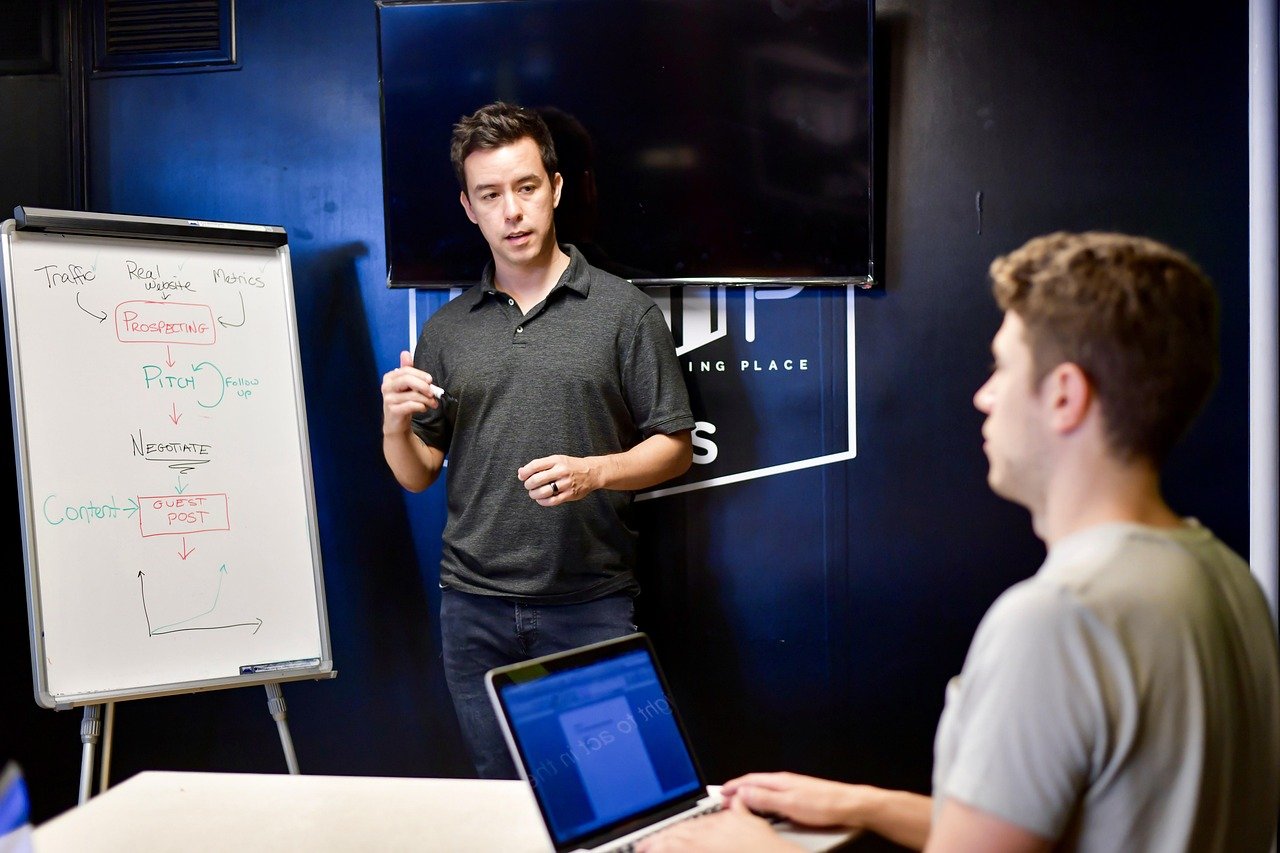
When to build an MVP: what prior evidence needs to show
Before deciding when to build an MVP, it helps to separate two different questions: “does this problem exist?” and “does this product work?” The first one can — and should — be answered without writing a single line of code. The second only makes sense once the first already has an answer.
According to a qualitative study published in August 2026, based on 29 interviews with founders from 16 software startups, there are distinct levels of evidence before a functional MVP — ranging from exploratory conversations to pre-sales with real payment (MDPI, 08/18/2026). The study isn’t a universal benchmark and guarantees nothing, but it describes a pattern: the more evidence involves money or real commitment, the more reliable it is.
Criteria to know if you already have enough evidence
- Specific, recurring problem — your audience describes the same problem through concrete, recent episodes, not hypothetical answers. Example: an inventory manager describes a mistake from last week, not “it happens sometimes.”
- Reachable audience — you can find and talk to people in your target audience without relying on intermediaries or expensive paid campaigns.
- Current alternative mapped — the audience already solves the problem somehow (spreadsheet, competitor, manual process), and you know the cost of that alternative.
- Buyer identified — in B2B products, the person who uses the tool isn’t always the one who approves payment; without mapping this, validation stays incomplete.
- Real commitment signal — a waitlist signup is weak; a pre-sale, deposit, or paid pilot is strong (MDPI, 08/18/2026).

When to validate with a prototype, pre-sale, or paid pilot before the MVP
The question “how to validate an idea before building an MVP” has a practical answer: use the cheapest experiment capable of testing the biggest risk in your hypothesis. Not every startup needs a visual prototype; not every hypothesis requires a pre-sale. The method needs to match what’s actually being tested (MDPI, 08/18/2026).
Validation methods and what each one tests
| Method | What it tests | Limitation |
|---|---|---|
| Structured interviews | Whether the problem exists and how often | Doesn’t prove willingness to pay |
| Landing page with signup | Initial interest in an offer | Signing up isn’t commitment |
| A/B message testing | Which value proposition resonates more | Needs minimum traffic to be reliable |
| Concierge MVP (manual service) | Whether the solution solves the problem, without automation | Doesn’t scale and requires direct human effort |
| Pre-sale or paid pilot | Real willingness to pay | Requires a concrete offer, not a vague idea |
Well-run interviews dig into a recent episode, the person’s current process, the alternatives they already use, the cost of the problem, and who approves the purchase. Generic compliments (“cool, I’d use that”) and hypothetical answers don’t prove demand (RITENRG, 10/01/2026).
When to build an MVP for real
Once prior evidence points to a confirmed problem, a reachable audience, and some level of commitment, it’s time to decide when to build an MVP in earnest. A functional MVP is an early version that delivers real value, tests critical hypotheses, and allows for structured feedback — it’s not an idea, a study, or a slide deck (Finep, 06/18/2026).
To actually be considered in the validation stage, the product needs to technically embody the solution, allow hands-on experimentation by users, receive iterative adjustments based on real usage, and show early market evidence — not just interest (Finep, 03/13/2026).
Common mistakes when scoping an MVP
- Including features for rare cases — adding “just in case we grow” features before confirming the product will actually grow. Example: building an advanced reporting dashboard before reaching ten active users.
- Ignoring real data during testing — validating with fake data when the hypothesis depends on real user behavior. An MVP should be tested with activation, retention, and conversion measured from real data (Microsoft, 11/01/2026).
- Assuming scalability without testing it — investing in architecture for thousands of users when there aren’t even a hundred yet. Scalability should be tested proportionally to risk, not anticipated upfront (Microsoft, 11/01/2026).
- Not defining a success threshold before testing — without an objective success criterion set in advance, any result tends to be interpreted however the founder wants (RITENRG, 10/01/2026).
- Skipping structured discovery — jumping straight into development without research, a clear problem definition, and prior prototyping. One industry source suggests 4 to 8 weeks for this stage, though that’s a private consultancy’s recommendation, not an industry standard (Startup House, 09/26/2026).

When it’s not yet time for an MVP
If the proposal still rests on generic opinions, an audience too broad to test, and hypothetical features, building an MVP is premature. The same applies when the real goal is to build a complete platform before figuring out who the users are, what outcome they value, and why they’d pay for it.
In September 2026, Steve Blank proposed temporarily calling a product’s first version an “IUP” — Initial Untested Product — instead of an MVP, arguing it should only count as evidence after being tested with real customers (Steve Blank, 09/25/2026). This is the author’s own interpretation, not an industry consensus, but it reinforces a practical point: calling something “minimum viable” before testing it with customers is, ultimately, fooling yourself about the real stage of the project.
When to build an MVP with specialized support
Once validation gives the green light — confirmed problem, reachable audience, real commitment — the next step is to scope the MVP rigorously: few flows, real data, metrics defined before launch. This is the moment to look for structured systems development or app development, with technical decisions aligned to the risk being tested, not the size of the founder’s ambition.
A project like ZapiFiq, for example, shows how a system can launch with a defined scope to solve one specific problem, instead of trying to cover every possible use case from day one.
Conclusion
The decision about when to build an MVP isn’t about rushing or playing it safe — it’s about sequence. First, test the riskiest hypothesis with the cheapest method available. Only then, with a confirmed problem, a reachable audience, and some signal of real commitment, move into functional development. If you already have that evidence and want to turn validation into a well-scoped MVP, reach out to Kairen through the contact form.
Frequently asked questions
How much does it cost to validate a product idea before building an MVP?
It varies by method: interviews and landing pages mainly cost time; pre-sales and paid pilots require a concrete offer but are still cheaper than developing a full system. The right amount depends on the hypothesis being tested, not a fixed price list.
Are a prototype and an MVP the same thing?
No. A prototype simulates the experience without necessarily working for real; it’s used to test perception and flow. An MVP delivers real, functional value, even if limited in scope.
How do I know when to build an MVP instead of continuing to validate?
When the problem has already been confirmed with concrete evidence (not just opinions), the audience is reachable, and there’s some signal of commitment — ideally financial. Without these three elements, it’s still worth validating more before building.
Can a poorly built MVP hurt validation?
Yes. If the scope is too broad, built with fake data, or launched without defined metrics, the test results become hard to interpret — which can lead to wrong decisions about whether to continue the project.
Sources
- FAQ Mulheres Inovadoras 2026 — Finep
- MI2026 Public Call — Finep
- Minimum Viable Product (MVP) — Microsoft for Startups
- AI Killed the MVP, Long Live the IUP — Steve Blank
- Validation practices in software startups — MDPI
- How Startup House Runs a Project Step by Step — Startup House
- Startup MVP Development — RITENRG