
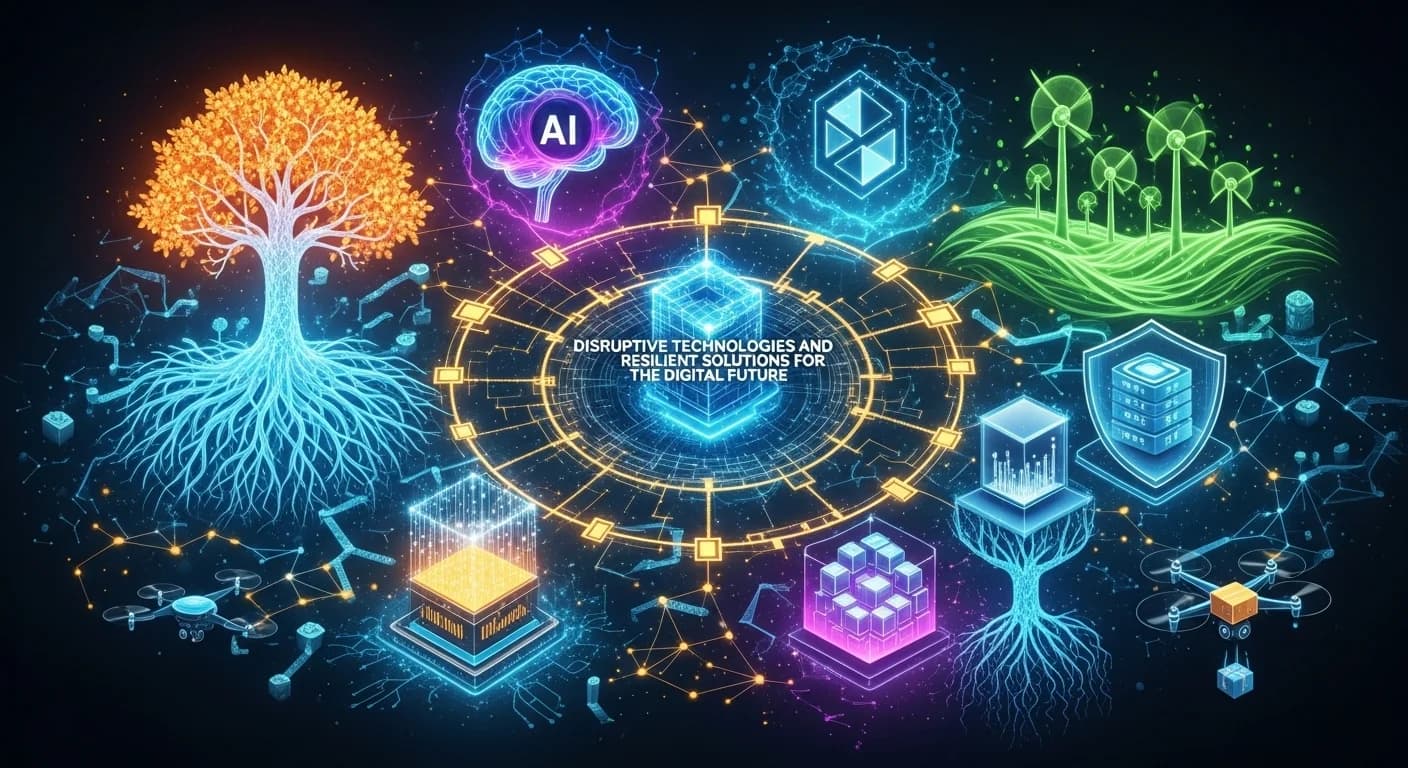
Disruptive Technologies and Resilient Solutions for the Digital Future in 2026
The digital world is constantly evolving, and disruptive technologies are shaping the future at an impressive pace. From Artificial Intelligence (AI) to Quantum Computing, these innovations have the power to radically transform how we live, work, and connect. However, to reap the benefits of these technologies, it is crucial to develop resilient solutions that can tackle emerging challenges.
Disruptive Technologies: Opening New Horizons

We live in an era of remarkable technological advances, and some of the main driving forces behind this progress are AI, the Internet of Things (IoT), and Quantum Computing. Each of these disruptive technologies carries enormous transformative potential.
Artificial Intelligence and Machine Learning

AI and Machine Learning (ML) are revolutionizing numerous sectors of the economy. With significant advances in algorithms and processing power, these technologies are being applied across a wide range of use cases, from intelligent virtual assistants to predictive data analytics and process automation. As AI becomes increasingly sophisticated, its possibilities expand, paving the way for innovative and transformative solutions.
Internet of Things: Connecting the World

IoT is transforming how we interact with the world around us. By interconnecting a vast array of devices, IoT enables large-scale data collection and sharing. This has a major impact on sectors such as smart cities, healthcare, and manufacturing, where IoT can optimize processes, boost efficiency, and improve people’s quality of life.
Quantum Computing: Driving Innovation

Quantum Computing represents a quantum leap compared to traditional computers. With its exponentially faster processing capability for certain problems, this technology has the potential to revolutionize areas such as cryptography, complex simulations, and process optimization. As advances in this field continue, Quantum Computing applications will become increasingly significant.
Resilient Solutions: Building a Secure Future
While disruptive technologies offer countless opportunities, they also bring new challenges that need to be addressed. To harness the benefits of these innovations and ensure long-term sustainability, it is essential to develop resilient solutions.
Advanced Cybersecurity
As our digital dependence grows, cybersecurity becomes a critical priority. Techniques for detecting and mitigating cyber threats, as well as developing systems that are secure and resilient against attacks, are fundamental to protecting individuals, businesses, and critical infrastructure.
Resilient Digital Infrastructure
A robust and adaptable digital infrastructure is essential to ensure service continuity and the ability to recover from disruptions and outages. This includes backup and redundancy systems, as well as the capacity to adapt to emerging changes and challenges.
Innovation Ecosystems
Creating innovation ecosystems through partnerships among companies, startups, and research institutions is critical to fostering resilient solutions. These ecosystems enable the combination of expertise, resource sharing, and the implementation of public policies that encourage innovation.
Challenges and Opportunities: Balancing Progress and Responsibility
As disruptive technologies advance, both challenges and opportunities arise that need to be addressed in a balanced and responsible manner.
Balancing Benefits with Ethical Concerns
It is crucial to balance the transformative benefits of disruptive technologies with ethical and privacy concerns. How can we ensure that AI, IoT, and Quantum Computing are developed and used ethically and securely, respecting privacy and individual rights?
Workforce Readiness
As automation and digitalization advance, the need for professional reskilling becomes increasingly evident. How can we prepare the workforce to adapt to these changes and take advantage of the opportunities offered by disruptive technologies?
Investing in Infrastructure and Digital Skills
For disruptive technologies to be fully leveraged, it is essential to invest in robust digital infrastructure and in upskilling the population. This ranges from expanding high-speed networks to promoting education and training programs in digital skills.
Cross-Sector Collaboration
Building resilient solutions requires a collaborative approach between the public and private sectors. How can companies, governments, and research institutions work together to develop innovative solutions and prepare society for the digital future?
Conclusion
Disruptive technologies are transforming the digital world at an impressive pace. From AI to Quantum Computing, these innovations offer a glimpse of the future, with countless opportunities to improve efficiency, productivity, and quality of life. However, to fully capitalize on these advances, it is essential to develop resilient solutions that can tackle emerging challenges.
Advanced cybersecurity, resilient digital infrastructure, and innovation ecosystems are key pieces of this equation. By balancing the benefits of disruptive technologies with ethical and privacy concerns, preparing the workforce for change, and investing in infrastructure and digital skills, we can build a future that is safer, more sustainable, and full of opportunities.
Want your business to drive sales and traffic? Get in touch with us and take your business to the next level!
To deepen your knowledge, also check out: