

How Page Load Speed Affects Sales
Have you ever wondered how your website’s load speed can directly impact your online sales? The connection is much closer than you might think. What if I told you that every extra second of loading time on your e-commerce site could mean up to a 7% drop in conversions? That’s right — your site’s speed is a critical factor in the success of your digital business.
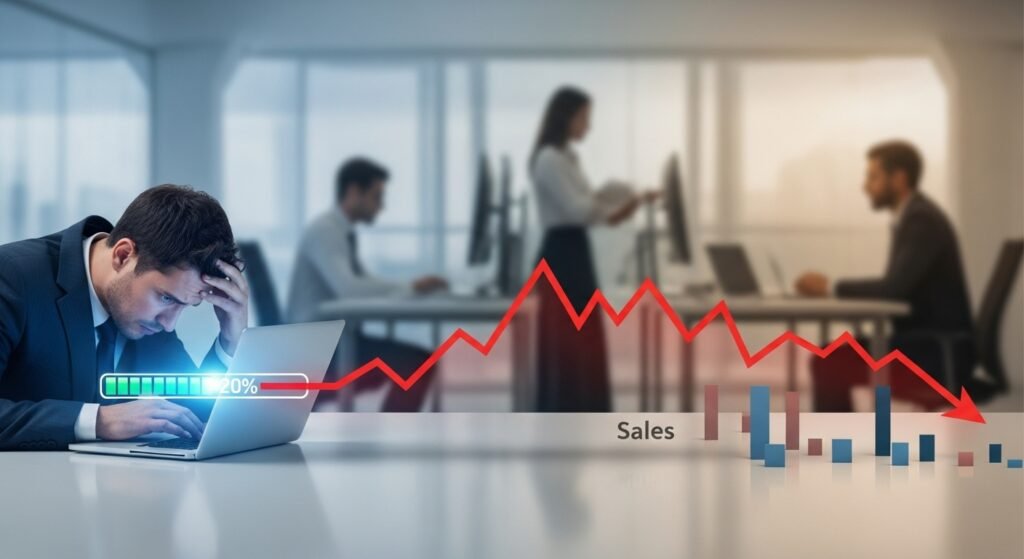
In this article, we’ll explore how load speed affects key metrics like bounce rate, average time on site, and of course, conversion rates and sales volume. You’ll discover the main factors that influence your site’s speed and learn practical strategies to optimize performance and boost your results.
The Impact of Load Speed on Sales
Picture this scenario: a potential customer arrives at your e-commerce store, ready to make a purchase. But when they click on a product page, the slow loading frustrates them and they simply close the tab, abandoning their cart. Unfortunately, this isn’t a fictional scenario — it’s an increasingly common reality.

Recent studies show that delays of just 1 to 3 seconds in page load time can cause up to a 7% drop in conversions[1]. In other words, a simple delay in displaying content is enough to make nearly 1 in 10 potential customers abandon their purchase before completing it.
But the impact of load speed goes beyond just the conversion rate. Research indicates that, on average, conversion rates drop 4.42% for every additional second of load time (between 0-5 seconds)[2]. This means the slower your site, the less likely your visitors are to complete a purchase.
The situation gets even worse when we look at cart abandonment data. According to Google, 53% of visits are abandoned if a page takes more than 3 seconds to load[2]. That means more than half of your potential customers will give up on their purchase if your site takes too long to respond.

These numbers clearly show how load speed directly impacts customer trust and their perception of your site’s quality. After all, who likes waiting for a slow, inefficient page?
Factors That Affect Load Speed
Now that you understand the importance of load speed for your sales, it’s important to know the main factors that can affect your site’s performance. Here are some of them:
Image and File Sizes
Heavy images and other media files, such as videos, can overload the server and significantly delay page loading. It’s essential to optimize these elements by reducing their size and quality when possible, without compromising the user experience.
Excessive Use of Resources
Plugins, scripts, widgets, and other additional resources can make your site slow and heavy. Identify and remove any unnecessary elements that are hurting performance.
Hosting Issues
Your site’s hosting infrastructure can also directly impact load speed. If the server is overloaded or has a slow connection, this will be reflected in the user experience.
User Connection
User-related factors, such as internet connection quality and the device being used, can also affect load speed. While you can’t control these directly, it’s important to consider them in your optimization strategies.
Strategies to Improve Load Speed
Now that you know the main factors influencing load speed, it’s time to learn some practical strategies to optimize your site’s performance and boost your sales. Let’s dive in:
Image and File Compression and Optimization
One of the most important steps is reducing the size of your image and media files. Use compression and optimization tools to decrease the weight of these elements without sacrificing visual quality.
Using Cache and CDN
Implementing caching techniques and using a content delivery network (CDN) can significantly speed up page loading by preventing visitors from having to download the same resources repeatedly.
Reducing Unnecessary Resources and Scripts
Carefully analyze all plugins, widgets, and scripts used on your site. Remove or replace any elements that aren’t essential to the user experience and your business operations.
Improving Hosting and Infrastructure
Invest in quality hosting with fast servers and robust infrastructure. This will help ensure your site loads quickly, regardless of demand.
Test and Monitor Constantly
Don’t stop here! Use performance testing and monitoring tools to identify bottlenecks and opportunities for continuous improvement. Track metrics like load time, bounce rate, and conversion rate to evaluate the impact of your optimizations.
Conclusion
As you’ve seen, your website’s load speed is a critical factor in the success of your online business. Every extra second of loading time can mean a significant drop in your sales and customer satisfaction.
Therefore, it’s essential to implement strategies to optimize your e-commerce performance. From image compression to improving hosting infrastructure, every action counts to ensure your site loads quickly and efficiently.
Want your business to generate more sales and traffic? Get in touch with us! At Kairen Studio, we have the expertise to turn your site’s speed into a competitive advantage and boost your results.
To deepen your knowledge, also check out: