

How to Protect Your Website from Common Attacks – Web Security
Have you ever stopped to think about how vulnerable your website might be to cyberattacks? These incidents can cause devastating damage, from the loss of confidential data to the complete disruption of your business operations. Unfortunately, according to data security predictions for 2026, digital attacks will continue to be a significant threat. But don’t despair — there are effective ways to protect your website and keep it secure.

In this article, we’ll explore the main types of attacks your website may face and the best practices to defend against them. You’ll learn how to implement robust security measures and stay up to date on emerging threats. Together, let’s make sure your website is shielded from cybercriminals and ready to face the challenges ahead.
Understanding the Main Types of Attacks
Before implementing security solutions, it’s essential to understand the most common types of attacks that can target your website. Some of the main threats include:
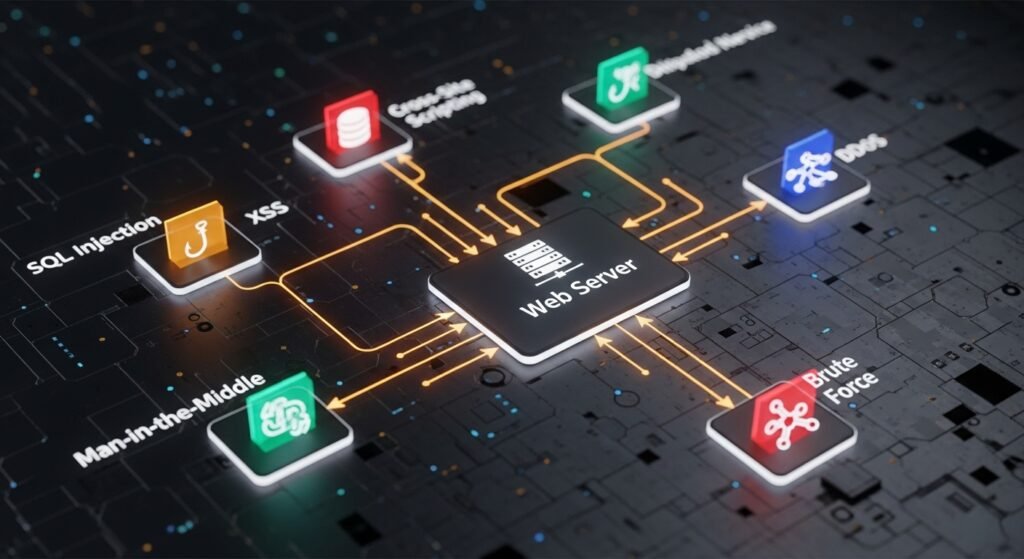
Injection Attacks
Injection attacks, such as SQL injection and code injection, exploit vulnerabilities in web applications to insert malicious code and gain unauthorized access to confidential information.
Brute Force Attacks
These attacks attempt to guess weak passwords or exploit stolen credentials, using automated tools to perform thousands of login attempts within a short window of time.
Denial of Service Attacks (DDoS)

DDoS attacks aim to overwhelm the website with a flood of traffic, causing it to slow down or even crash, preventing legitimate users from accessing its content and services.
Phishing and Social Engineering Attacks
These attacks use deceptive techniques, such as fake emails or fraudulent websites, to trick users into revealing confidential information like passwords and credit card details.
Implementing Security Best Practices

Now that you know the main types of threats, it’s time to implement effective measures to protect your website. Here are some essential practices:
Keep Your Software Updated
Make sure that all software versions, operating systems, plugins, and applications used on your website are always updated with the latest security patches. This way, you’ll significantly reduce exposure to known vulnerabilities.
Use Strong Passwords and Two-Factor Authentication
Adopt the use of complex and unique passwords for all accounts related to your website. Additionally, implement two-factor authentication (2FA) to add an extra layer of security to your logins.
Properly Configure Your Server and Applications
Ensure that the web server and applications on your website are configured according to security best practices. This includes properly setting permissions, protections against code injection, and other secure configurations.
Use HTTPS for Encryption
Implement the HTTPS protocol on your website to encrypt communication between visitors and your server. This helps protect sensitive information such as login credentials and financial transactions.
Monitor and Analyze Logs
Maintain constant monitoring of your website’s activity logs. This will help you identify and respond quickly to any suspicious activity or intrusion attempts.
Adopting Additional Protective Measures
Beyond basic best practices, there are other measures that can further strengthen your website’s security:
Use Firewalls and Web Security Solutions
Implement a firewall and a web application firewall (WAF) to monitor and filter your website’s traffic, detecting and blocking attacks in real time.
Perform Regular Backups and Test Restoration
Maintain regular backups of all your website’s content and data, and make sure to periodically test the restoration process, ensuring you can recover quickly in the event of an incident.
Train Your Team on Security
Invest in training your team on security awareness and best practices. This will help prevent human errors from exposing your website to threats.
Have an Incident Response Plan
Create a detailed action plan for handling potential security incidents, including response procedures, notification, mitigation, and recovery.
Stay Up to Date on Emerging Threats
To keep your website secure in the long run, it’s essential to follow trends and emerging threats in the cybersecurity world. Here’s what you should do:
Follow Security Reports
Regularly read reports and studies, such as the “2026 Data Security Reports,” to stay informed about the key trends and threats that may affect your website.
Join Security Communities
Participate in forums, groups, and communities of web security professionals. These spaces are great for learning from experts, sharing experiences, and staying on top of the latest developments.
Implement Detection and Prevention Solutions
Consider adopting threat detection and prevention tools and services that can monitor your website for suspicious activity and block attacks in real time.
Conclusion
Protecting your website against cyberattacks should be a constant priority. By implementing the security practices discussed in this article, you’ll be taking an important step toward shielding your online business from emerging threats.
Remember: web security is not just an option but a necessity for any business that wants to maintain a solid and trustworthy online presence. Start applying these measures today and make sure your website stays safe from cybercriminals.
Want your business to generate sales and traffic? Contact Us! And take your business to the next LEVEL!
To deepen your knowledge, also check out: