

Keyword Strategy for Local Businesses and SMEs
Have you ever imagined what it would be like to have your local business or small and medium-sized enterprise (SME) appearing on the first pages of Google whenever your potential customers searched for something related to your product or service? That is the power of keyword strategy, a powerful tool that can drastically transform the visibility and growth of your business.
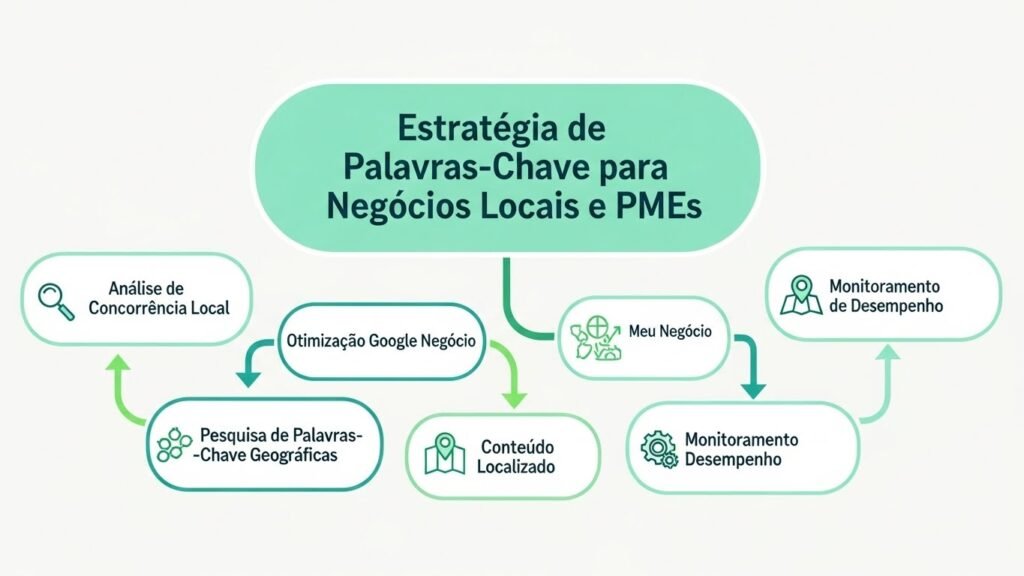
Imagine the following scenario: A resident of your city searches for “Italian restaurant near me” on Google. Your business, an excellent Italian restaurant, appears prominently in the top search results. This means your company has a much better chance of being discovered and chosen by that potential customer, boosting your sales and the success of your venture.
In this article, we will explore in detail how keyword strategy can benefit local businesses and SMEs, from the research stage to ongoing optimization. You will learn proven techniques to attract more qualified customers and accelerate your growth. So get ready to take your business to new heights!
The Importance of Keywords for Local Businesses and SMEs
In the digital world, keywords are the bridge that connects potential customers directly to your products and services. When someone performs a search on Google or another platform, the keywords they type determine which businesses will appear in the results.
For local businesses and SMEs, this visibility is crucial. After all, most consumers today research online before making purchasing decisions, whether looking for a “nearby restaurant,” a “contract law attorney,” or a “reliable auto repair shop.”

When your business is strategically positioned for relevant keywords, you become much more accessible to your potential customers. This means more opportunities to generate leads, increase traffic to your website, and ultimately convert those visitors into sales and long-term loyalty.
Keyword Research: Finding the Right Terms
The key to a successful keyword strategy begins with thorough research. You need to identify which terms and phrases your target customers are typing into search engines.
Understanding Local Search Behavior
Recent research shows that local search patterns differ significantly from general search patterns. For example, studies reveal that local queries tend to be more specific, focusing on location, nearby services, and products.
Additionally, mobile device usage is crucial in this context, as most local searches are performed on smartphones and tablets. This means your keyword strategy must account not only for term relevance but also for mobile optimization.
Keyword Research Tools
There are several online tools that can help you identify the most suitable keywords for your local business or SME. Some popular options include Google Ads Keyword Planner, Ubersuggest, and Semrush.
By using these tools, you can analyze search volume, competition, and relevance for a wide range of keywords related to your industry. This allows you to prioritize terms with the greatest potential to attract customers interested in your products or services.
Optimizing Your Content with Keywords
After identifying the most valuable keywords, it is time to strategically incorporate them throughout your online content. This step is crucial to ensuring your business is found and recognized by search engines.
Optimizing Your Website
Start by integrating keywords into key areas of your website, such as page titles, headings, meta descriptions, and the content itself. This helps search engine algorithms understand what your business is about and position your company relevantly in search results.
Remember not to force keyword inclusion — they should be inserted naturally and smoothly, avoiding “keyword stuffing,” which can hurt your ranking.
Optimizing Your Google Business Profile
Another key piece of keyword strategy for local businesses is optimizing your Google Business Profile (formerly known as Google My Business). Make sure to include relevant keywords in the description, categories, and other sections of this profile.
Additionally, keep your business information (name, address, phone number) consistent across all your online profiles, as this sends positive signals to search engines about the reliability and relevance of your company.
Monitoring and Adjusting Your Strategy
Keyword strategy is not a static process — it is essential to track your performance over time and make the necessary adjustments.
Analyzing Key Metrics
Tools like Google Analytics can provide valuable insights into how users are finding and interacting with your content. Pay attention to metrics such as traffic, conversion rate, and search result rankings to determine which keywords are performing best.
Based on this data, you can refine your strategy by testing new terms, adjusting the emphasis on certain keywords, and further optimizing your content.
Staying Up to Date
The world of keywords and SEO is constantly evolving. Stay up to date on best practices, algorithms, and trends, as this will allow you to make the most of the ever-changing opportunities.
Invest in reliable resources, attend industry events, and follow specialized blogs. This way, you will ensure that your keyword strategy is always aligned with best practices and the ever-changing needs of your customers.
Complementary Digital Marketing Strategies
While keyword strategy is fundamental, it should not be viewed as a standalone solution. To achieve the best results, it is important to integrate it with other digital marketing techniques.
Local SEO
In addition to keyword optimization, a solid local SEO plan can further boost your business visibility. This includes creating service and location pages, obtaining online citations, and building a robust Google Business profile.
Online Advertising
Online advertising campaigns, such as Google Ads or social media ads, can complement your keyword strategy. This way, you can reach even more potential customers, including those who did not naturally find your search results.
Social Media Engagement
An active and engaging social media presence can also play an important role. Share relevant content, interact with your audience, and take advantage of targeted advertising opportunities to further amplify your online visibility.
Conclusion
A well-planned and implemented keyword strategy is essential for the success of local businesses and SMEs in today’s digital environment. By identifying the right key terms, optimizing your content, and constantly monitoring your results, you can boost your company’s visibility, attract qualified customers, and drive your sales.
Do not underestimate the power of keywords — they are the key to connecting your business directly to your potential customers. Start implementing these techniques in your business now and get ready to see the transformative results that an effective keyword strategy can deliver.
Want your business to generate sales and traffic? Get in touch with us! And take your business to the next LEVEL!
To deepen your knowledge, also check out: