

No-Code and Low-Code Tools: When to Use Them in Projects
Have you ever imagined being able to create applications and digital solutions from scratch, even without being a programming expert? This reality is increasingly accessible thanks to the rise of low-code and no-code platforms. These tools are revolutionizing the way companies develop and implement technology, allowing professionals from various fields to become “citizen developers” and drive the digital transformation of their businesses.

In this article, we’ll explore the world of low-code and no-code platforms, understanding how they work, which scenarios they apply to, and the main benefits and considerations in their adoption. Get ready to discover how these solutions can drive innovation, agility, and efficiency in your business.
What Are Low-Code and No-Code Platforms?
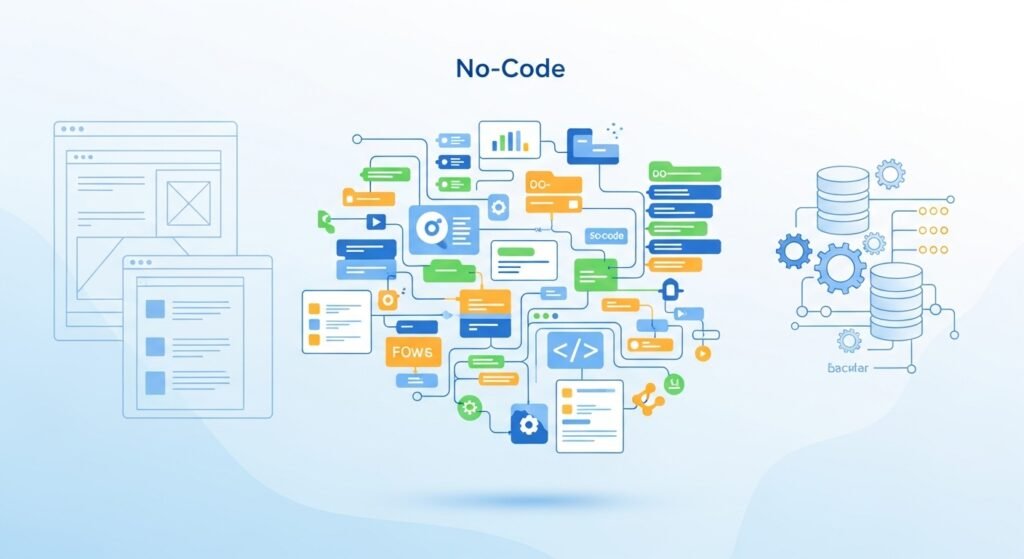
Low-code and no-code are revolutionary approaches to software development that drastically simplify the process of creating applications and digital solutions. Unlike the traditional model, where you need to write hundreds or thousands of lines of code, these platforms allow users with little to no technical knowledge to build applications in a visual and intuitive way.
Key Features of Low-Code and No-Code Platforms:
- Visual drag-and-drop interface: These tools offer a user-friendly graphical interface with pre-built components that can be easily dragged and positioned to create the application logic.
- Code abstraction: Users don’t need to write lines of code manually. Instead, they define workflows, business rules, and data integration through an intuitive visual interface.
- Integration and scalability: Low-code and no-code platforms typically offer connectivity with APIs, databases, and legacy systems, enabling the construction of integrated and scalable solutions.
- Collaboration and rapid iteration: These tools facilitate teamwork and continuous improvement implementation, accelerating the development cycle.
When to Use Low-Code and No-Code Platforms?
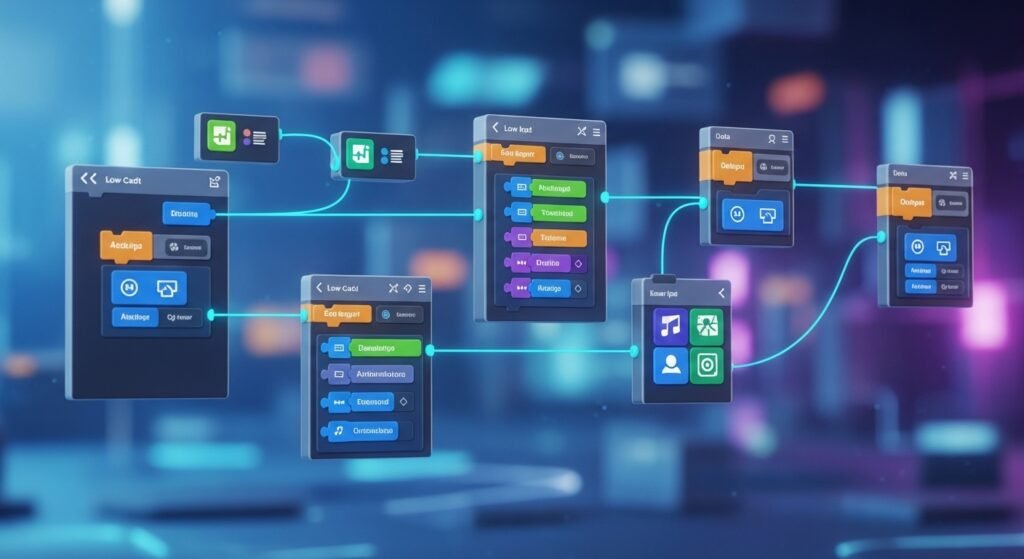
Low-code and no-code platforms have proven especially useful in various scenarios, allowing companies of all sizes and industries to accelerate their digital transformation. Some of the main applications include:
Process Automation
These tools are ideal for digitizing and automating workflows, such as creating project management systems, HR forms, monitoring dashboards, and much more.
Custom Business Applications
Low-code and no-code platforms allow professionals from different areas, such as marketing, finance, and customer service, to build tailored solutions for their specific needs.
Prototyping and Agile Development
With the ease of using these tools, it’s possible to quickly create prototypes and test new products and services, accelerating innovation.
Mobile and Web Applications
Many low-code and no-code platforms offer features for mobile and web app development, democratizing access to custom digital solutions.
Advantages of Using Low-Code and No-Code Platforms
Adopting these technologies brings a series of significant benefits for companies, including:
Development Agility
With reduced need for coding and ease of use, low-code and no-code platforms allow applications to be built and deployed much faster, accelerating value delivery.
Cost Reduction and Resource Optimization
By reducing the dependency on highly specialized IT teams, these tools help optimize development and maintenance costs, while freeing up internal resources for other strategic projects.
Democratization of Development
Low-code and no-code platforms empower professionals from different areas to become “citizen developers,” expanding innovation and problem-solving capabilities within the organization.
Greater Flexibility and Adaptability
With the ability to iterate and adjust quickly, these solutions make companies more agile and capable of adapting to market changes and customer needs.
Challenges and Considerations in Adoption
While low-code and no-code platforms offer many benefits, it’s important to consider some challenges and relevant issues in their implementation:
Technical and Scalability Limitations
Some tools may have restrictions regarding advanced features, integration with legacy systems, and scalability for complex demands.
Security and Governance Concerns
The democratization of development requires additional care with data security, access control, and regulatory compliance.
Need for Training and Enablement
To make the most of these platforms’ capabilities, it’s essential to invest in training programs and foster a “citizen developer” culture within the organization.
Conclusion
Low-code and no-code platforms represent a significant transformation in how companies develop and implement technology. By enabling professionals from various areas to become “citizen developers,” these solutions democratize innovation, accelerate digital transformation, and drive organizational agility.
So, if you’re looking to boost your business’s efficiency, productivity, and responsiveness, it’s worth exploring the possibilities offered by low-code and no-code platforms. With them, you can create custom applications, automate processes, and leverage digital transformation — all in a much faster, more cost-effective, and accessible way.
Want your business to generate more sales and traffic? Get in touch with us and take your business to the next level!
To deepen your knowledge, also check out: