

The Financial Sector and Its Adoption of AI Advances
Artificial intelligence (AI) is revolutionizing the financial sector, transforming the way companies analyze data, manage risk, and interact with customers. This technological advance is driving a wave of innovation, efficiency, and opportunities never before seen in this industry. In this article, we will explore the main applications of AI in the financial sector, its benefits, and the challenges faced in adopting this cutting-edge technology.

Applications of AI in the Financial Sector
AI is being widely adopted across various areas of the financial sector, bringing intelligent and automated solutions to a broad range of problems. Let’s highlight some of the main applications:
Data Analysis and Decision-Making
AI algorithms are capable of processing and analyzing enormous volumes of financial data, identifying patterns, trends, and valuable insights that support more precise and informed decision-making. This advanced analytical capability allows financial institutions to refine their investment strategies, risk management, and market forecasting.
Risk Management and Fraud Detection
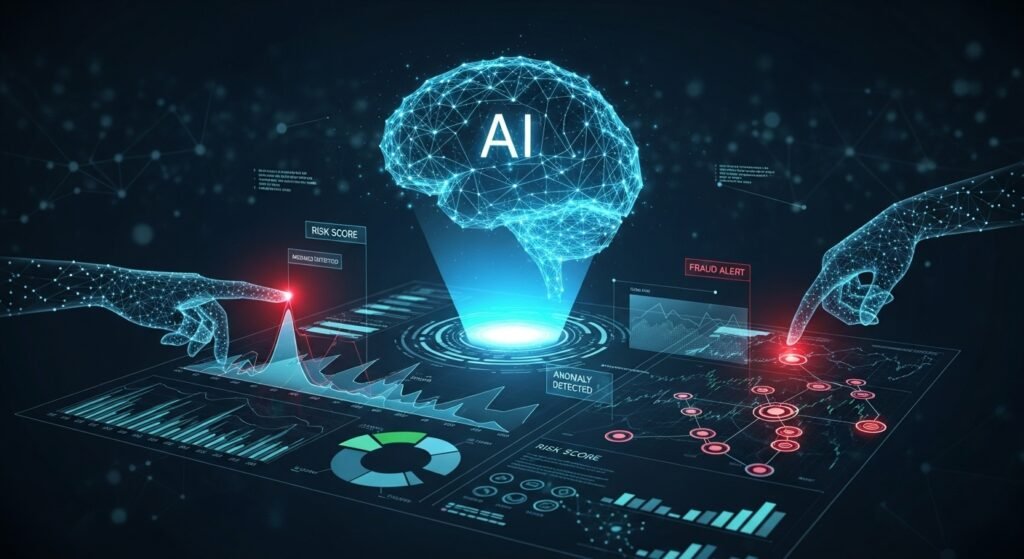
AI plays a crucial role in monitoring and mitigating financial risks. Through machine learning, AI systems can detect suspicious activity patterns, identify fraud attempts in real time, and help companies stay compliant with industry regulations.
Customer Service and Virtual Assistants
AI-powered chatbots and virtual assistants are transforming the customer experience in the financial sector. These systems can provide personalized service, answer questions, process requests, and even carry out basic banking transactions, improving efficiency and customer satisfaction.
Process Automation and Operations Optimization
AI is being widely adopted to automate repetitive tasks and optimize operational processes in financial institutions. From loan approvals to account reconciliation, AI can boost productivity, reduce errors, and free employees to focus on higher-value activities.
Investments and Algorithmic Trading
In the investment sector, AI is revolutionizing the way buy and sell decisions are made. AI-based algorithmic trading systems can analyze market data, identify opportunities, and execute transactions autonomously, often at speeds far exceeding human capability.
Benefits of AI Adoption in the Financial Sector

The strategic adoption of AI in the financial sector brings several tangible benefits, ranging from improved operational efficiency to product and service innovation.
Increased Efficiency and Productivity
Automating repetitive tasks and optimizing processes through AI allows financial institutions to reduce costs, minimize errors, and boost employee productivity.
More Informed Decision-Making
AI’s ability to analyze large volumes of data and identify valuable insights helps companies make more accurate and evidence-based decisions, improving resource allocation and risk management.
Cost Reduction and Process Optimization
Process automation and more efficient fraud detection enable financial institutions to save time and money while improving the overall efficiency of their operations.
Improved Customer Experience
AI-powered chatbots and virtual assistants offer personalized service, fast responses, and automated solutions, elevating customer satisfaction and loyalty.
Challenges and Considerations in AI Adoption

Despite the numerous benefits, adopting AI in the financial sector also faces some challenges that need to be carefully addressed.
Security, Privacy, and Ethics Concerns
Implementing AI requires heightened attention to data security and customer privacy protection. Additionally, institutions must ensure that the use of AI aligns with the industry’s ethical guidelines.
Need for Specialized Skills
AI adoption requires financial companies to invest in developing specialized skills in data science, machine learning, and predictive model development. This demands an ongoing effort in workforce training and upskilling.
Integration with Existing Systems
AI implementation must be carefully planned to ensure seamless integration with the systems and infrastructure already in place at financial institutions, avoiding disruptions and maximizing the technology’s benefits.
Regulation and Compliance
The financial sector is heavily regulated, and AI adoption must comply with current rules and regulations. Companies need to work closely with regulatory bodies to ensure their AI-based solutions meet compliance requirements.
Trends and Future Outlook
As AI continues to evolve, we can expect to see even more advances and revolutionary applications in the financial sector in the coming years.
Integration with Other Emerging Technologies
AI will become increasingly integrated with other emerging technologies such as blockchain, the Internet of Things (IoT), and quantum computing. This technological convergence will drive even more transformative innovations in the financial sector.
Impact on Digital Transformation
AI will be a key catalyst for digital transformation in the financial sector, enabling the digitization and automation of processes, personalization of products and services, and faster, data-driven decision-making.
Role in Product and Service Innovation
AI will enable the development of new financial products and services, such as personalized virtual assistants, automated investment platforms, and advanced risk management solutions. This constant innovation will keep financial institutions competitive and relevant in the market.
Conclusion
The adoption of artificial intelligence in the financial sector is becoming increasingly crucial for maintaining the competitiveness and relevance of institutions in this ever-evolving market. From data analysis to process optimization and improved customer experience, AI is transforming the way the financial sector operates, delivering tangible benefits in terms of efficiency, accuracy, and innovation.
Despite the challenges related to security, privacy, specialized skills, and integration with existing systems, the future outlook is extremely promising. As AI integrates with other emerging technologies, its impact on the financial sector’s digital transformation and the creation of new products and services will become increasingly evident.
Therefore, it is crucial for financial institutions to take a strategic and proactive approach to AI, seeking to make the most of this revolutionary technology’s benefits. Stay up to date with AI advances in the financial sector and explore ways to implement it in your own organization to drive growth and innovation.
Want your business to generate sales and traffic? Contact Us! And take your business to the next LEVEL!
To deepen your knowledge, also check out:
- PayPal acquired Cymbio to advance AI rollout in financial services
- Wells Fargo hired Faraz Shafiq, former AWS executive, to lead AI innovation
- TSMC began mass production of 2nm chips for AI and data centers
- SoftBank discusses additional $30 billion investment in OpenAI
- Microsoft launches Maia 200 chips with SK Hynix memory for AI data centers